


There's a particular satisfaction that comes from making someone swing and hit the air. It’s a moment where awareness beats force. The precision of being exactly where you need to be, while your opponent is exactly where they shouldn't be, is the foundation of technical fighting. Sammy Birdseye, who fights out of Collingwood Boxing Club, understands this better than most. Her fighting style, which she describes as "precise" and "evasive," has earned her the nickname "slippery."
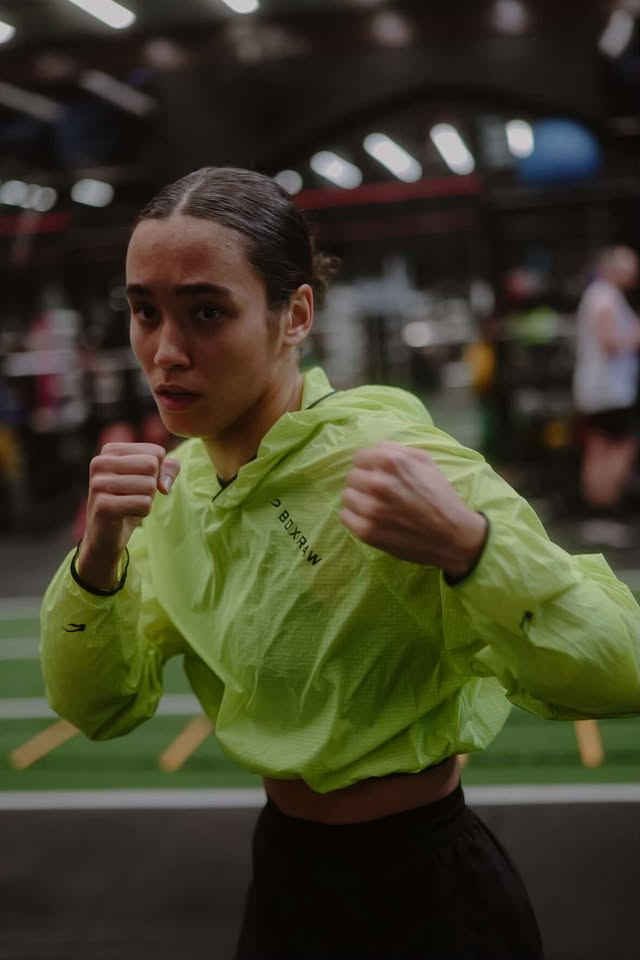
CONTRADICTORY FREQUENCIES
“During my first ever session I went in and they gave me these pink gloves that were like 100 years old and smelled absolutely awful. So sour, disgusting. And then I finished the session and I was like, I'm buying a new pair of gloves, and I didn't look back.”
Sammy found a passion for training at 19 and, in her words, “was locked in for life,” set on competing in amateur fights. In her early career, she operated on what she called a "points game" strategy, aiming to make opponents look foolish while racking up clean shots. However, this movement-based approach, which requires evasion and distance management, was complicated by new rules and norms that favored aggression and damage.
“Boxing is a bit more geared around aggression nowadays, I think, which is something that I really need to try and get better at. I don't think I'm a very angry person. I think that's something that I've been trying to work on, but I feel like sometimes when you try to get angry in a fight, you try to get aggressive, I just like start swinging and then I end up getting tired.”
Contemporary scoring systems and social media algorithms want to see violence. It's a contradiction that every technical fighter must navigate. Too much control and the judges might penalize you. However, swinging, exhaustion, and a loss of focus are the side effects of zeal without temperance. The judges, the crowd, and the sport expect the melding of opposites. How does one box and live with expectations about moving in ways that are not their own?
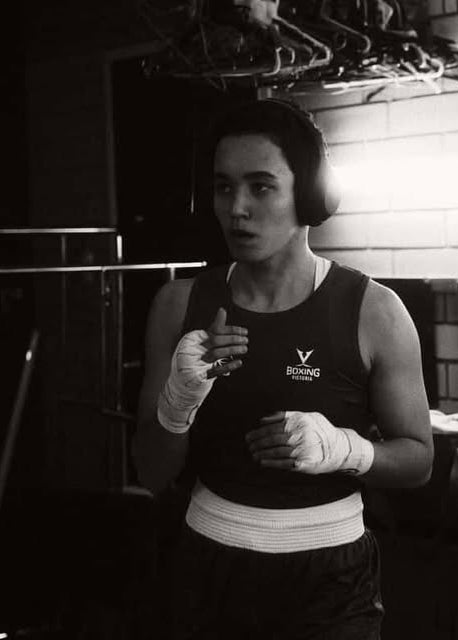
presence by way of pressure
“I've actually started seeing a sports psychologist because if you get angry in a fight or if you try to force aggression it can make you anxious. You get in your head a little bit. I've never seen a psychologist in my life. I had no idea what I was getting into and I went into my last fight just being able to kind of bring myself back when I'm in [in the ring].”
Expectations are our mental friction. For Sammy, the physical challenges of boxing pale in comparison to the mental ones. "The mental game is my main challenge," she admits. It's a sentiment that resonates with anyone who's ever waited ringside for their turn to step over the ropes.
"During my last fight, I was like ‘I've been doing all this like psychology work. I'm going to get in there and I'm going to be so chill.’ Then they had us weigh in in front of 50 people and we had to flex and shit. I was like, "Wow, this is really interesting." And then I got in the fight and the [psychology] just went out the window. I just felt like I was floating. Like there was no groundedness. There was nothing.”
Sammy was open with us about her pre-fight anxiety, and shared what she learned with a sports psychologist–namely, about presence. But getting there takes work. The key to performance is detachment from the outcome. She described getting there by focusing on internal factors–her breath, her beliefs, her movement–all of which de-emphasizes an obsession with what your opponent might do. External chaos is infinite, but so is the space in your mind when you are exactly where you’re at, whether you’re in the ring or elsewhere.
“I've noticed quite a change in how I fight in terms of just being a bit more controlled but also having that focus and a little more of that aggression. It's a very difficult thing to balance. I think that's the main thing about boxing. I've got the boxing part down pat. I think it's just the mental game that's like the main issue.”
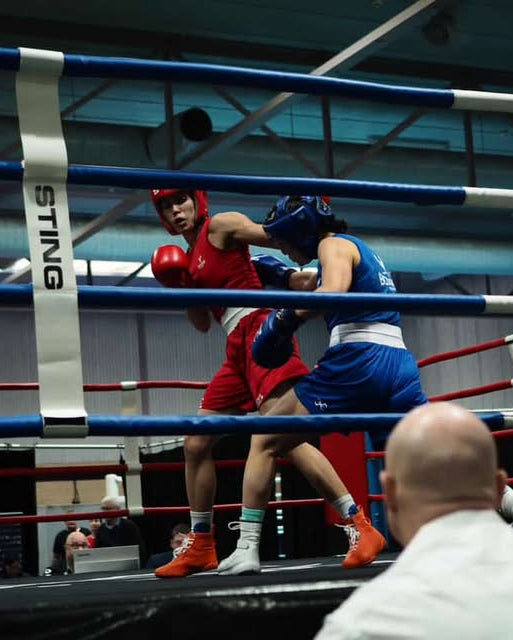
SLOW IS SMOOTH SMOOTH IS FAST
“During the state titles I was like, ‘Wow.’ I was so present and I came out of it and said, ‘I actually enjoyed that.’ I wasn't like, ‘I want this to be over.’ And it's been like that since my first or my second fight. It's been all the fights I've had, I've always been like, ‘Oh, can I just get this done?’ Whereas this year, I was like, ‘Oh my god, this is great. I want to do like four more rounds. This is what I should be feeling when I fight. I shouldn't be feeling like I'm literally fighting for my life.’”
Practices of being present took Sammy from a fight for her life mindset to a powerful, even joy-filled, calm. She told us that preventing the state of ungroundedness or a “freeze” was about going first without worry–which can be effective, but, much like aggression, has its limits. After applying the mindfulness techniques–breath work, environmental awareness, all the things that sound "cringy but actually work”, in Sammy’s words–she felt so present that she enjoyed the fight. She further described this enjoyment as a “slow motion feeling,” when you see the punch coming, you move, and your opponent's fist passes through the space where you were. Everything is in flux. You’re responding instead of thinking–and there you have the greatest potential for force. It's the paradox of combat sports: the moments of greatest violence require the greatest calm.
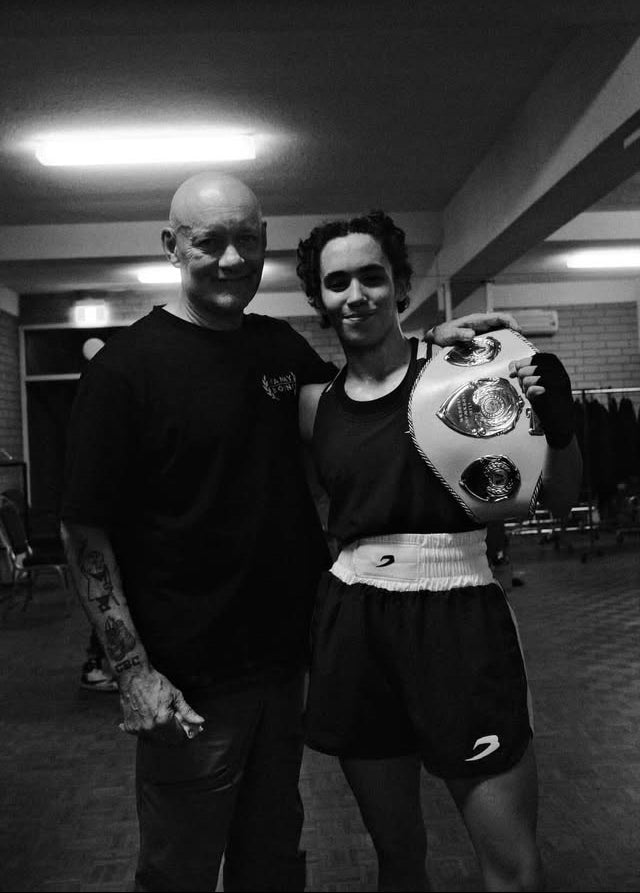
JUST THIS DAY, THEN THE NEXT ONE
“Just wake up in the morning, take a few breaths and just listen to your breath or feel how cold it is when you take it in and then when you breathe it out it's warm, like these little things that just kind of bring you back into yourself, and remind you that you are here.”
After 38 fights, including a challenging year moving up a weight class, she’s learned that motivation doesn’t come solely from outcomes. It has to come from the “day-to-day.” The flow state described above can’t be summoned. Instead, it has to be earned by sharpening your awareness in the everyday movements from the jab, to the breath, to preparing your next meal. The goal is to walk into every moment without the last one - no matter how grand or mundane.
‘I think I want to kind of have that feeling again, of going in with no pressure, no nothing, not thinking, that's why I'm trying to do other things and be a bit less of a boxer. Being able to go into like this year's tournaments and stuff like that thinking, who cares if I win or lose? Like you know, it's not my whole life. It's literally a drop in the ocean.”
Something that is perhaps hard to remember in this sport when you literally feel your losses as bruises on your skin, is that they ultimately fade, and the next opportunity arises. Following a loss at Nationals, Sammy is looking forward to big tournaments and world championships, all while maintaining a “no pressure” attitude by being fully committed to exactly what is in front of her, trusting the opportunity will follow from attending to the -now- whether that is boxing or other facets of life. It’s about being exactly where we should be, while the expectations of others are exactly where we shouldn't.
Follow Sammy’s journey here